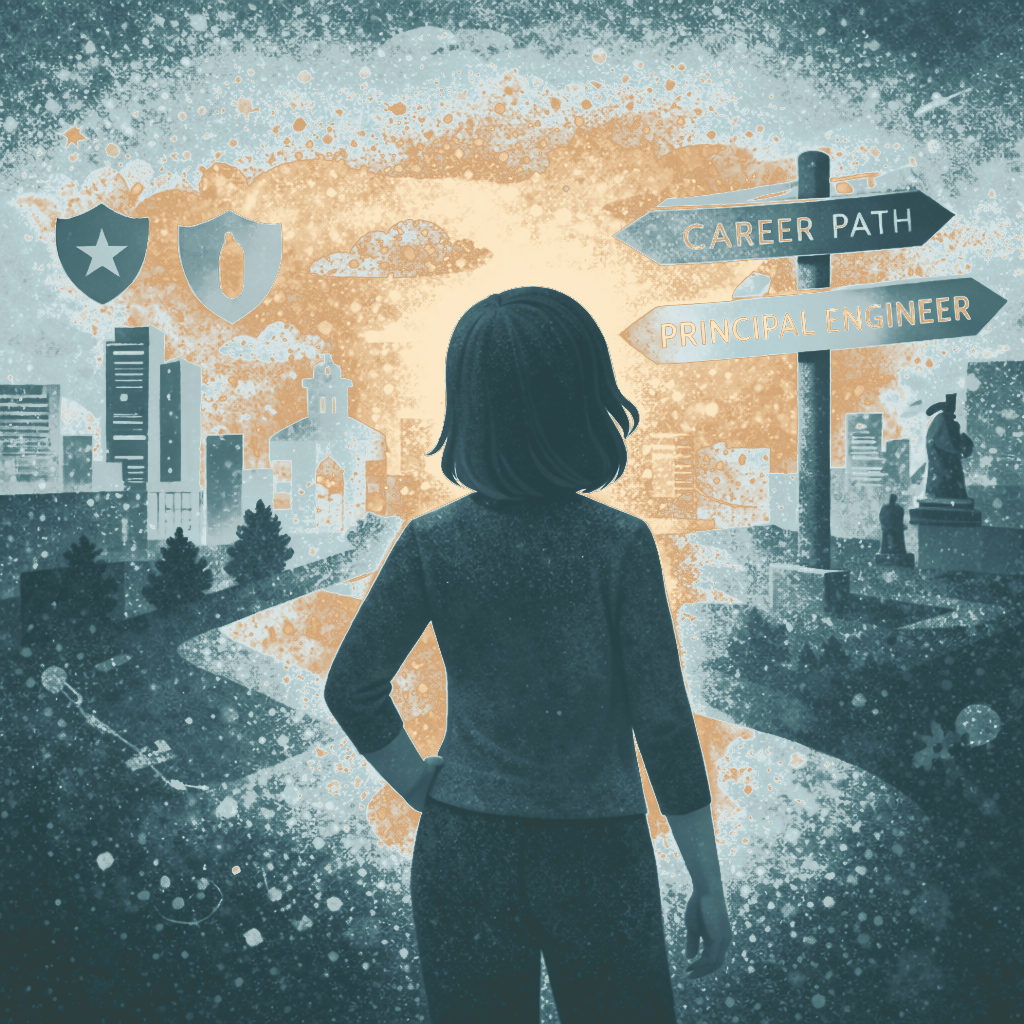
When the Title Needed to Catch Up
In early 2022, our WordPress developer left. That vacancy turned into a turning point for me. Within a year I was offered another promotion and asked to decide what direction I wanted to grow in. Even before that, I had been looking beyond day to day development and asking bigger questions. I was thinking about how digital solutions could solve division level problems, how to design systems that would hold up years down the road, and how the work we did now would shape what came next.
The title Principal Software Engineer felt like the right match. It recognized the perspective I was already bringing, with a broader scope, more strategy, and responsibility for the long term direction of our digital platforms.
This promotion marked a more intentional chapter in my career. I started focusing on how technology decisions could serve our whole division. Rather than just solving for the project in front of me, I continued asking: How will this scale? How do we ensure maintainability and security? How can today’s work lay a solid foundation for the future? Those forward looking questions had already become part of how I approached everything.
Building the Team & Infrastructure
One of my first priorities was strengthening the WordPress development team. I recruited and onboarded new developers and worked closely with them to build processes that minimized friction. Mentorship and training became central to the role. It was not just about teaching code, but helping people see how their work connected to larger university goals and preparing the team for what we would need next.
After a year, I formally became the manager of that team. That shift gave us clarity and permission to speak with radical candor in our internal discussions. It also gave me room to plan ahead with the team, balancing immediate work with the technical and strategic direction I knew was coming.
At the same time, I led several technical initiatives to prepare us for growth. We consolidated WordPress themes, streamlined internal workflows, and added safeguards so quality and security were part of the process from the beginning. Each change strengthened our digital products for today while laying the groundwork for future growth.
Looking Ahead with AI & Strategy
During this time, I deepened my focus on what artificial intelligence might mean for our work. I had already been exploring how to use new technology before it was common practice, and AI was no different. I studied foundational AI and generative AI and eventually earned an AWS AI Practitioner certification. That gave me the confidence to build small prototypes and begin testing AI agents. My goal was to find ways AI could reduce support load, enrich donor experiences, and unlock insights from data.
In that season, I found both permission and space to keep elevating my thinking. I was already proactive about identifying problems and heading them off early, and this period gave me the opportunity to do that at a larger scale. I kept looking ahead, asking how systems should evolve, how new technology fits into the roadmap, and how we could anticipate challenges before they surfaced.
The role of Principal Software Engineer was never just about the title. It gave me the authority to act on the forward thinking I was already doing, to bring AI into the conversation, and to help chart how University Advancement uses technology to meet its goals.